Forecasting Project
Forecasting Project
THe ask
In my fashion forecasting class, we were tasked as a team to simulate being a trend forecaster and determine a trend that will be widespread in a year, backed by research.
SKILLS used
Slide design
Photoshop & Moodboards
In-depth research
Collaboration
Time management
the team

Caryn Haynes

Abby Shaw

Margaret Conroy

Eian Murphy
Tyla Lawrence
process
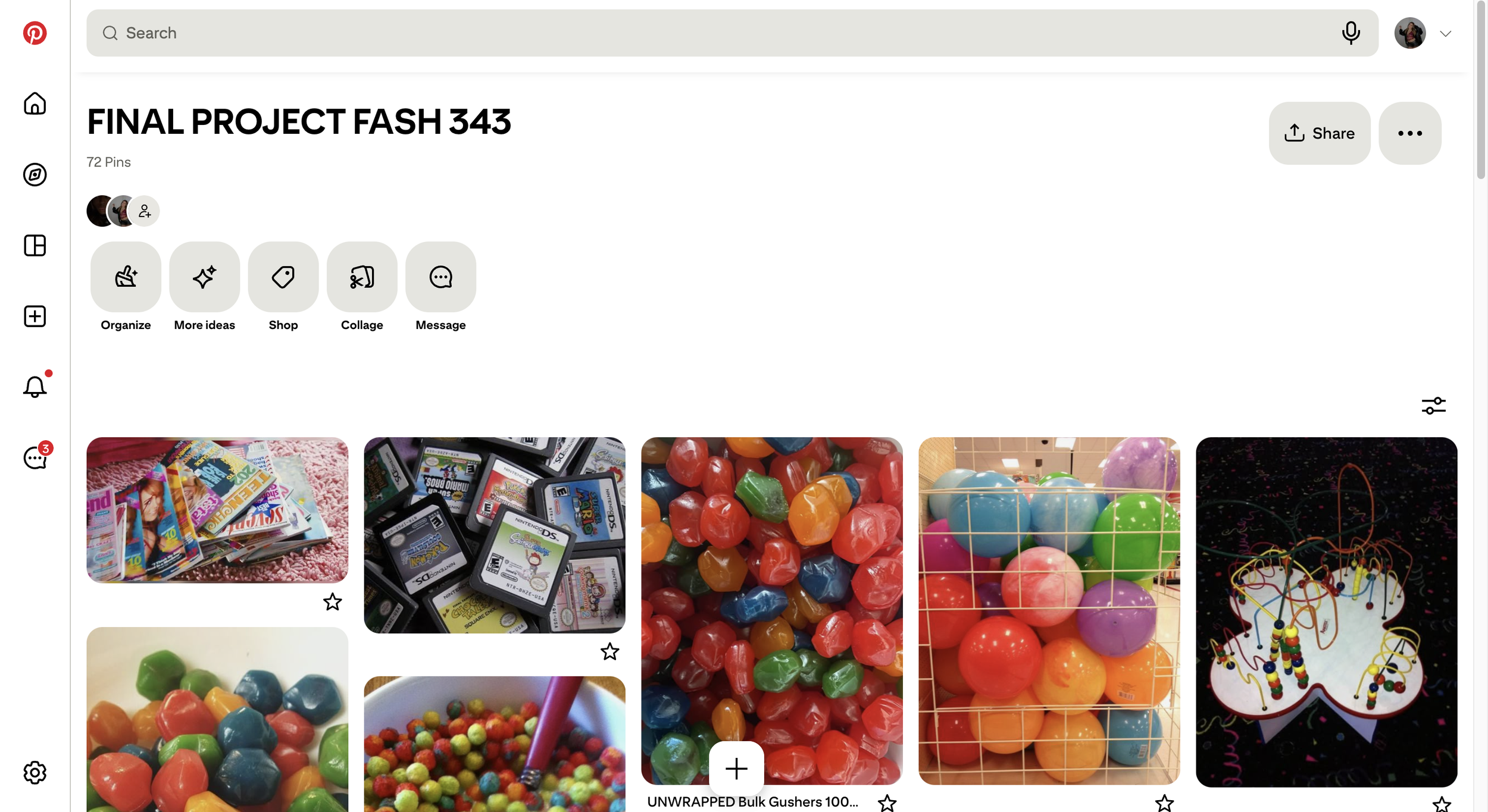
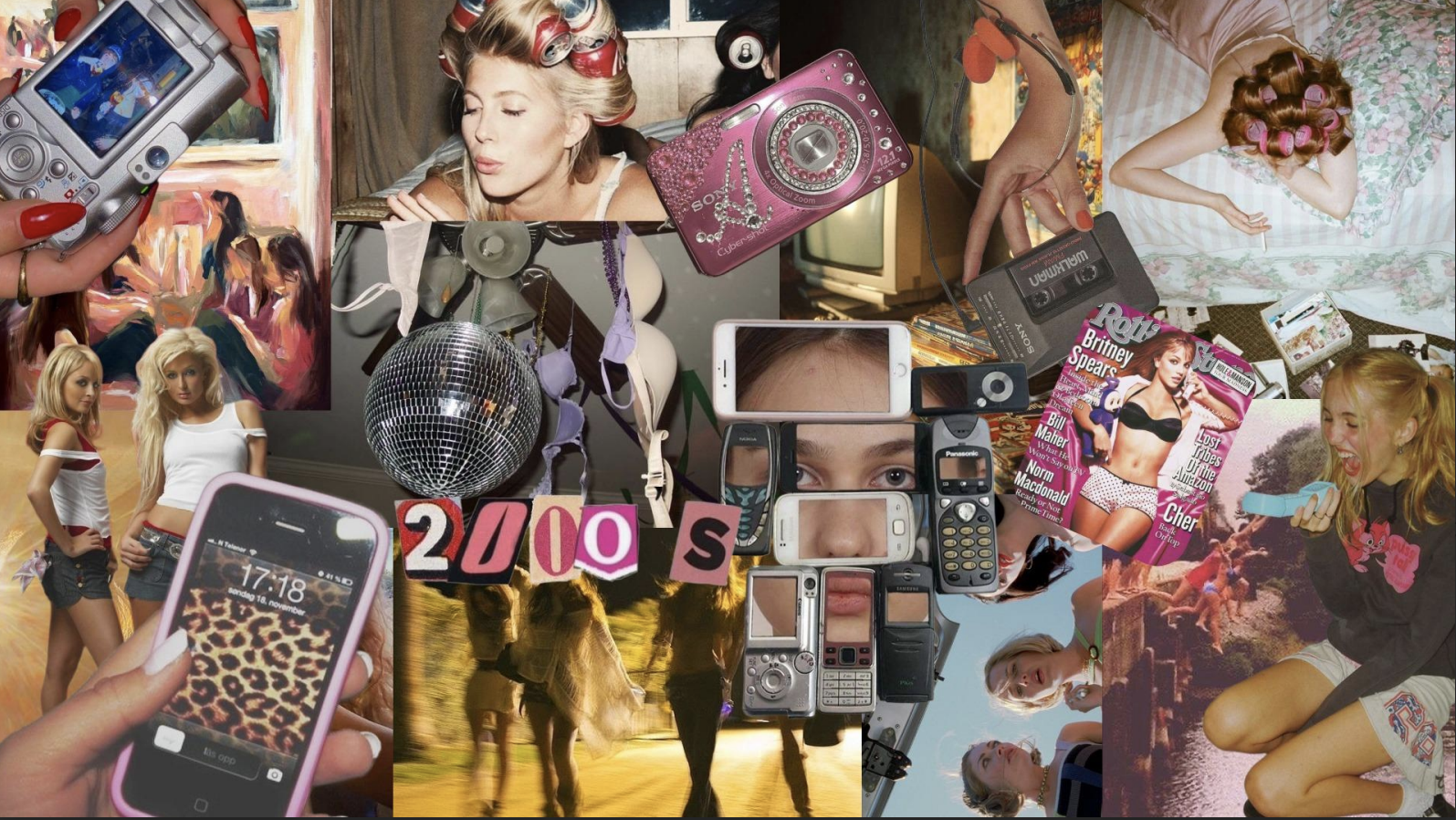
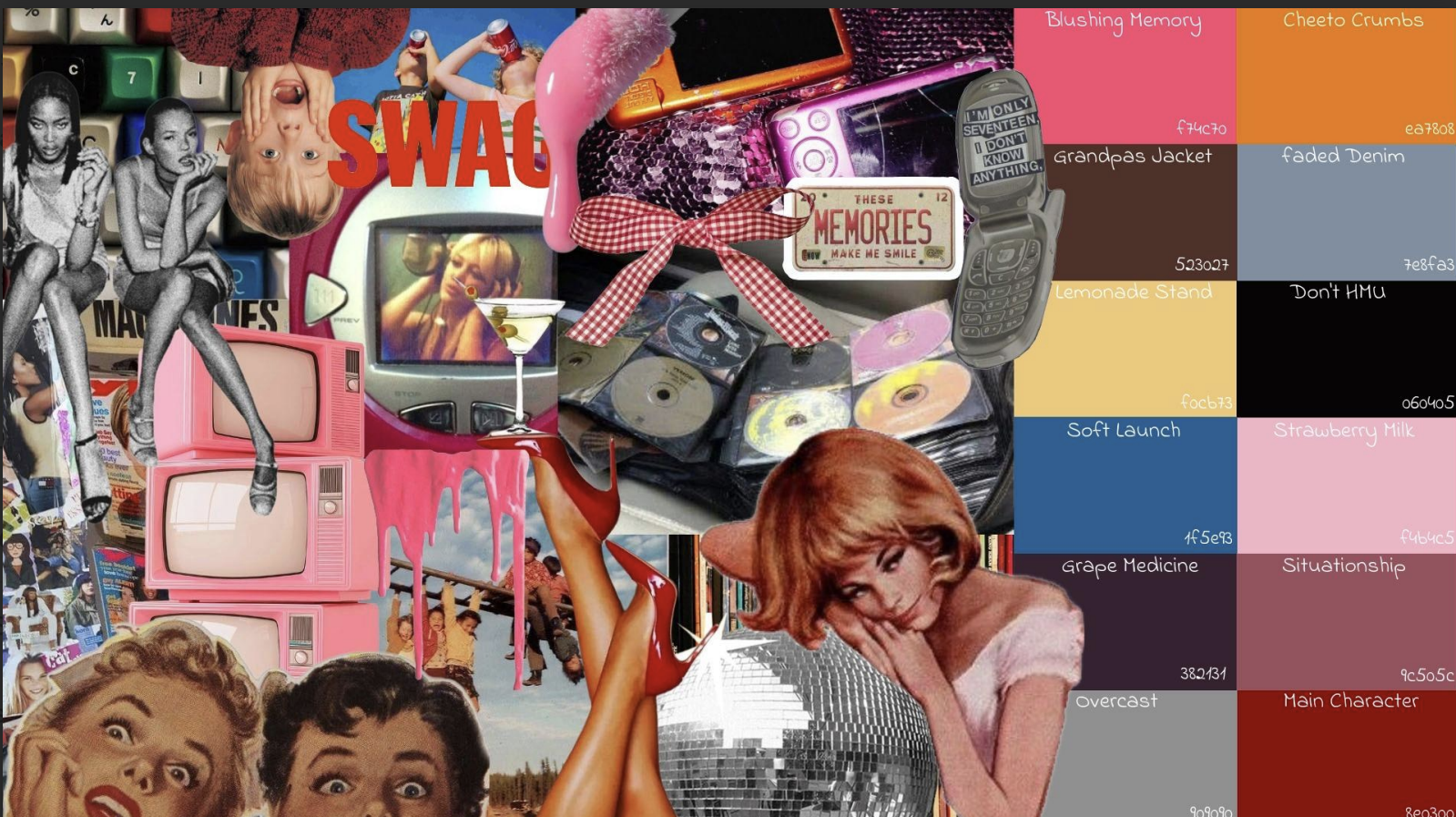
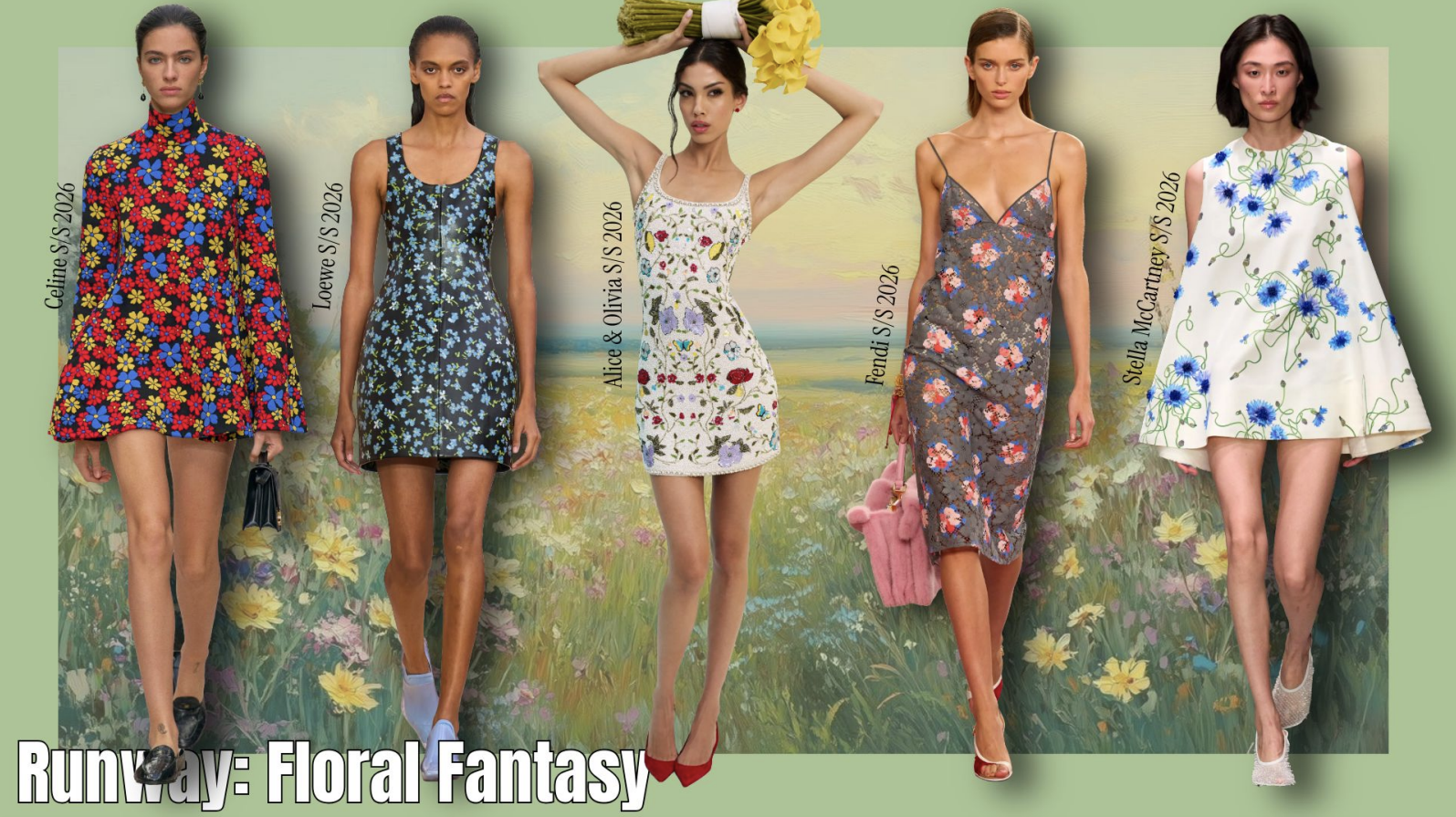
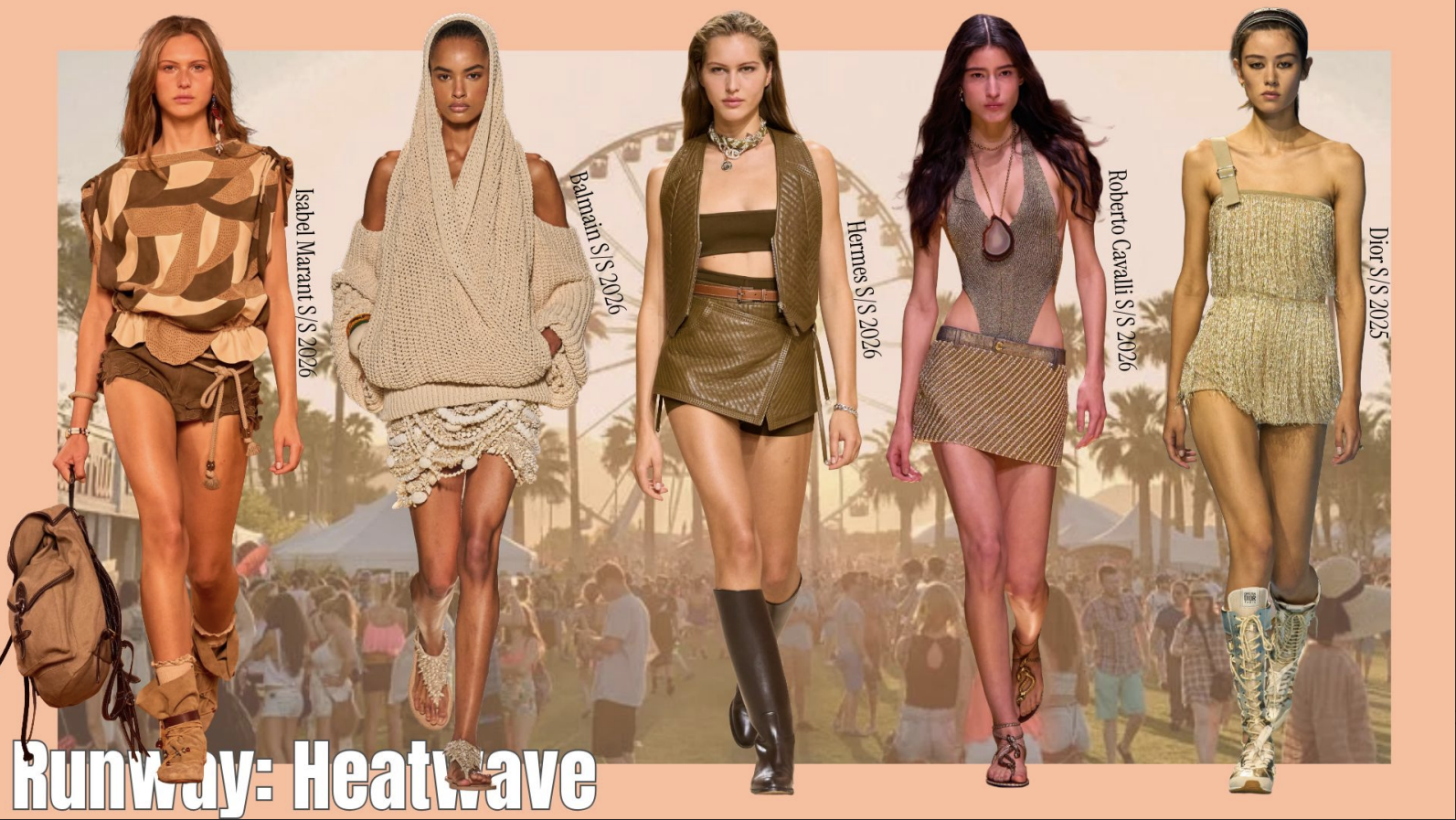
The process of this project began when all my teammates and I agreed that nostalgia has been seen a lot in fashion and will most likely be seen for years to come. We started searching through Pinterest and searching websites to find research to back up our forecast. We then began the moodboards and color stories to showcase what the idea of nostalgia truly looks like. Also, we created a video that gives the audience an idea of what we are trying to get across. Then, the last part of this project included finding runway/street style photos for our textiles, prints/patterns, and different themes of how nostalgia is being showcased in street style and on the runway.
Textiles
-
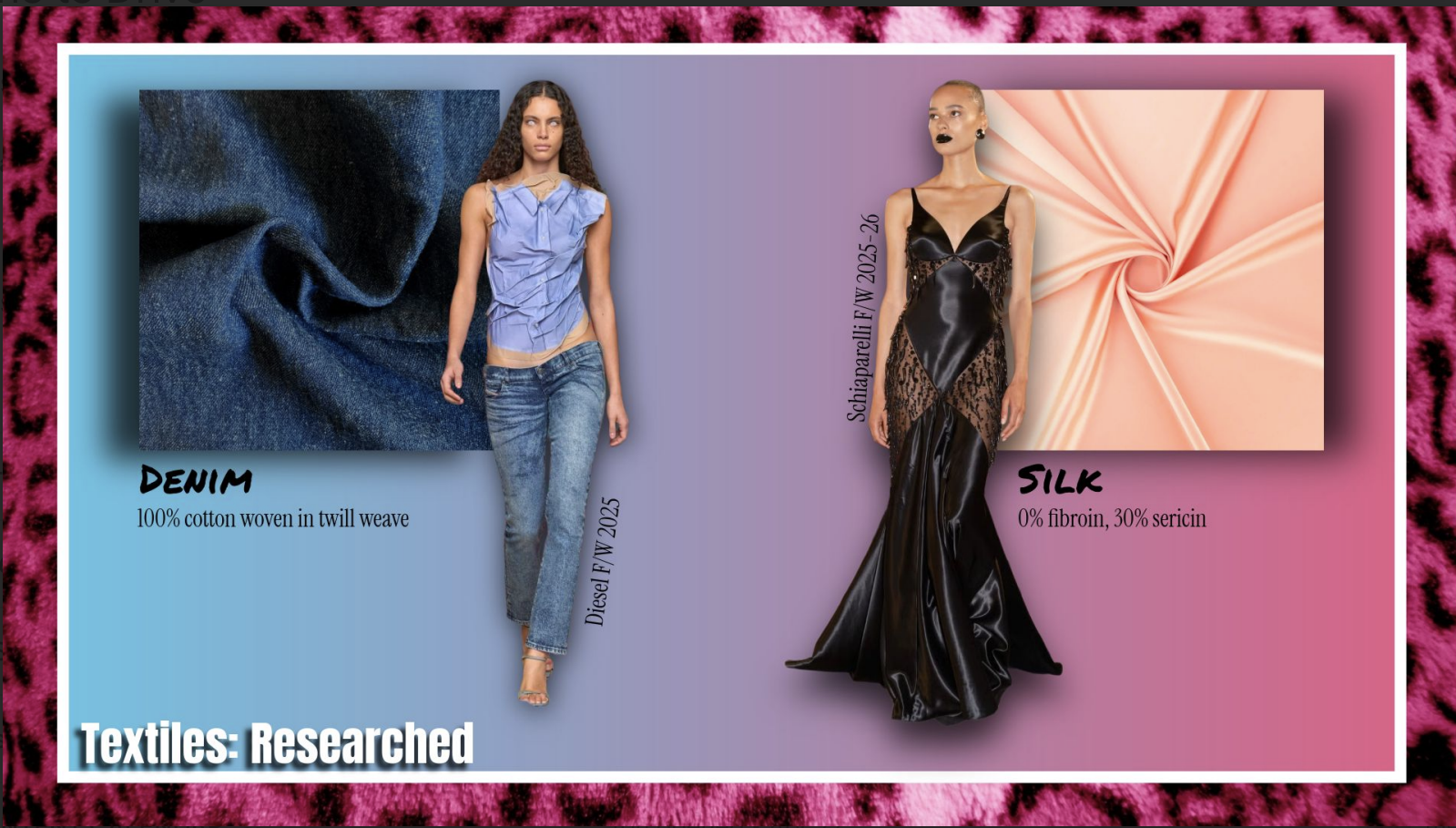
We chose denim because it is a timeless staple that has maintained relevance across nearly every era of modern style. In the 2000s and early 2010s, denim became especially iconic with the rise of low-rise jeans, distressed finishes, and washes that reflected the era’s bold and carefree style. Today, we’re witnessing a revival of these same silhouettes and washes, specifically the faded denim wash that was popular in this era. Denim’s strength, flexibility, and wide appeal make it a perfect fabric to capture both nostalgia and modern style.
-
We chose silk for its strong presence in Y2K and early 2010s fashion. During this time, silk slip dresses and camisoles were seen on red carpets, nightlife fashion, and everyday styling. As fashion moves once again toward minimalist silhouettes and elevated basics, we’re seeing silk come back as a go-to fabric, especially in the revival of slip dresses and lingerie-inspired styles.
-
The knit and woven textiles have long provided designers with the "building blocks" upon which to create designs that are both timely and timeless, wearable and versatile, and capable of sustaining numerous fashion trends through time. Yet, in practical use, plain weave, and jersey knit appear to have enduring qualities, extending at least into 2027 in product life cycles.
-
The knit and woven textiles have long provided designers with the "building blocks" upon which to create designs that are both timely and timeless, wearable and versatile, and capable of sustaining numerous fashion trends through time. Yet, in practical use, plain weave, and jersey knit appear to have enduring qualities, extending at least into 2027 in product life cycles.
-
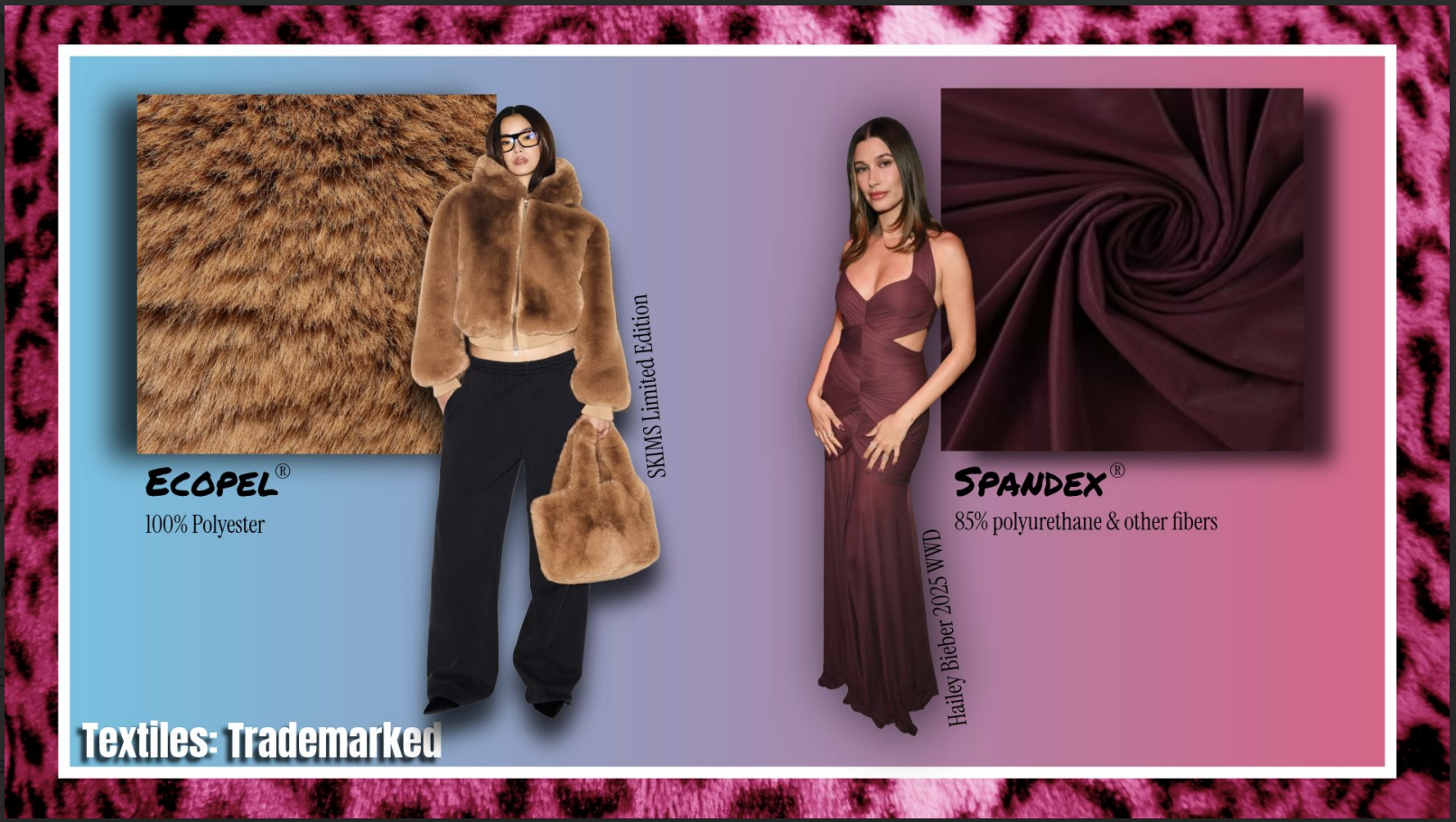
Ecopel provides a meaningful connection between early 2000s fashion and today’s push toward sustainability. In the Y2K era, faux fur trims, fuzzy jackets, and textured accessories were major statement pieces. Ecopel gives that same soft look while using environmentally conscious production methods and avoiding harm to animals. It allows us to recreate the nostalgic and playful textures of the 2000s while aligning with modern values of ethical and sustainable sourcing.
-
We selected Spandex because it embodies the stretchy, body-conscious silhouettes that defined much of Y2K fashion. During the early 2000s, form-fitting styles were everywhere, fitted tops, flared pants, and sporty, athleisure-inspired looks that emphasized movement and curve definition. Spandex became essential during this era because it offered the flexibility needed to achieve those sculpted fits. One of the most iconic examples of Spandex-driven design from this time is the bandage dress. Popularized by brands like Hervé Léger, the bandage dress used thick, stretchy strips of fabric blended with Spandex to create a highly structured yet ultra-tight silhouette. These dresses hugged the body in a way that highlighted the Y2K obsession with glam, nightlife fashion, and celebrity styling. The comeback of body-con pieces within the years proves how Spandex continues to influence form-focused fashion across decades. Its excellent elastic recovery, durability, and ability to maintain shape make it ideal for athleisure-inspired garments, these trends came back around 2016. Hailey Bieber was seen wearing the bandage dress in 2025 at the Fashion Trust US awards show, made by YSL, revived from 2008.
outcome
We presented our project in front of a trend forecaster at Future Snoops, leading NYC trend agency. We got great feedback from our audience and the forecaster. Although I am not as interested in trend forecasting as much as buying'/PR/marketing, I enjoyed this project a lot and enjoyed collaborating with my teammates. It also helped my time management skills as it was a big workload and was not easy finding a time for my group to meet most of the time.